New Study: Sepsis vs Septic Shock: Long‑Term Outcomes
A new study led by the National Critical Care Research Collaboration (NCCR) evaluated survival over five years among critically ill sepsis or septic shock patients discharged alive from hospital.
Findings
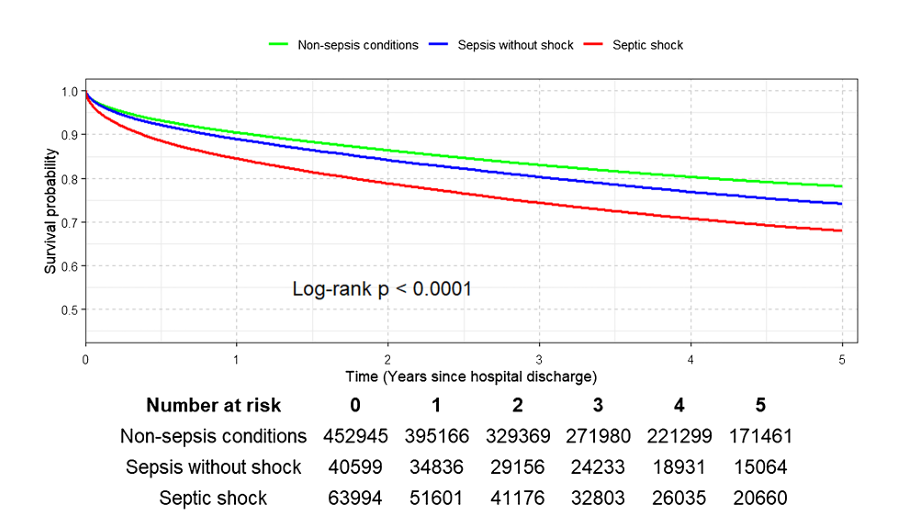
Of 557,538 hospital survivors, 7.3% had sepsis without shock, 11.5% septic shock, and 81.2% non-sepsis conditions. At five-years, unadjusted survival was lowest for septic shock (68.0%, 95% confidence interval/CI = 67.6–68.4%), sepsis without shock (74.2%, 73.7–74.6%), and non-sepsis (78.2%, 78.1–78.3%). After adjustment, hazards ratio/HR for sepsis without shock remained at or below the null relative to non-sepsis; 0–1 year: HR = 0.95, 0.92–0.98; 1–3 years: 0.96, 0.93–1.00; 3–5 years: 1.03, 0.97–1.08, while septic shock showed persistent independent excess mortality; 0–1 year: HR = 1.05,1.03–1.08; 1–3 years: 1.03, 1.00–1.06; and 3–5 years:1.09,1.05–1.14. Major predictors of mortality included age, frailty, comorbidities, and organ support.
Interpretation
Septic shock was associated with persistent independent excess mortality over five years after hospital discharge, whereas in sepsis without shock, this was largely explained by pre-existing comorbidity and frailty.